Community Tree Planting Day in celebration of SG60 & World Nature Conservation Day
Temasek Lifesciences Laboratory (“TLL”) staff and volunteers planted 60 native trees along the Rail Corridor (Bukit Timah stretch) on 29 Jul 2025. Ten (10) of these native trees are Paranephelium macrophyllum (Gesiar) propagated by tissue culture and will be reintroduced into the wild — possibly a first for this species.
The tissue-cultured trees are the product of the Singapore Endangered Native Tree Project, a joint effort by TLL, and the National Parks Board, Singapore (NParks), in partnership with Temasek Foundation.
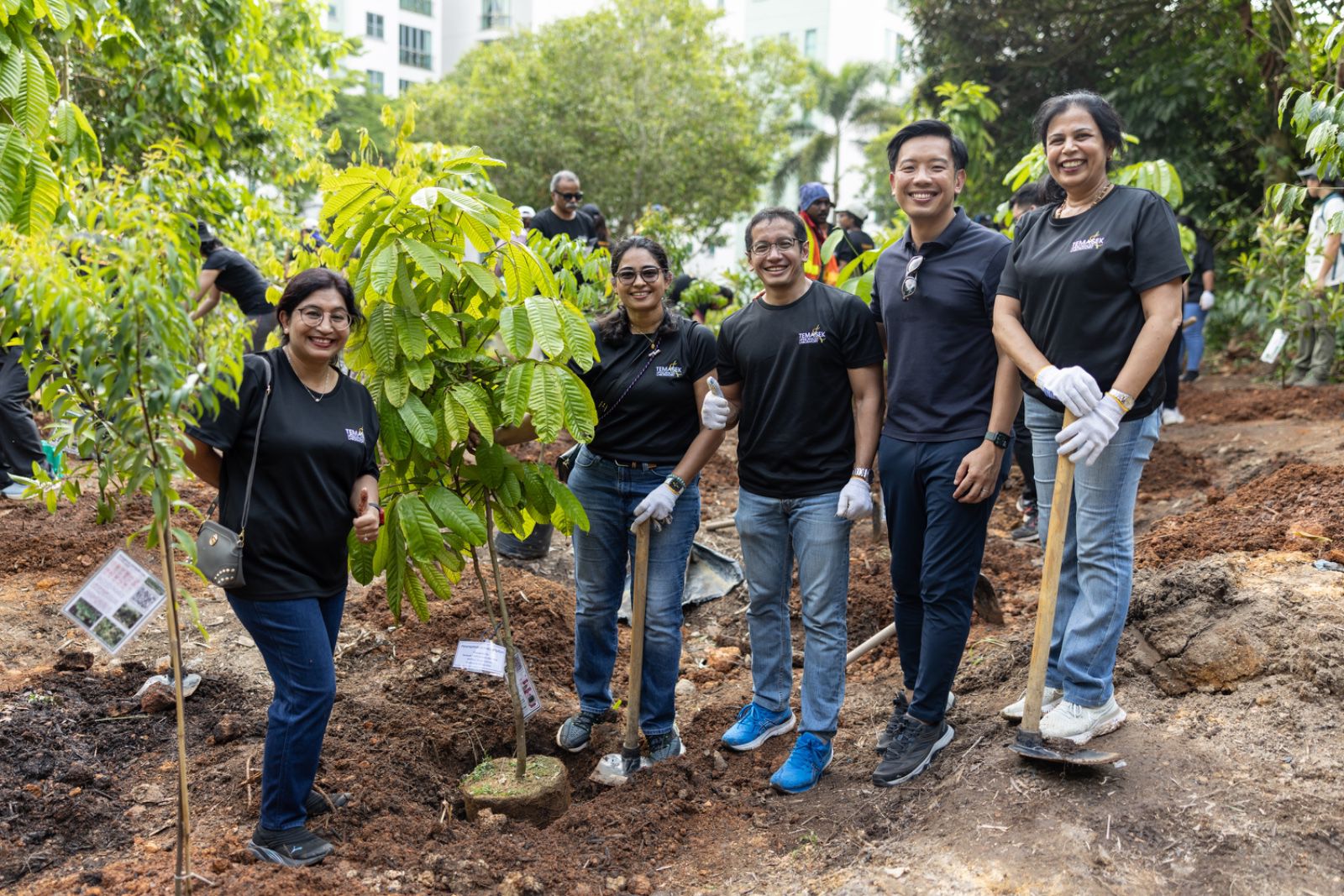
(Photos from Ministry of National Development Office)
THE SINGAPORE ENDANGERED NATIVE TREE PROJECT
Endangered native tree species are often rare in the wild and reproduce only during infrequent masting seasons, resulting in limited availability of viable seeds for regular propagation and overall low natural reproductive rates (i.e. sporadic flowering, predated seeds and low seed viability). Starting a tissue culture programme for a species early, prior to having only one individual left, would help preserve the genetic diversity by increasing the number of individuals from different lineages. Preserving a broader genetic base and growing multiple species together will enhance biodiversity and ecosystem resilience. This will reduce the risk of local extirpation2 due to pests, diseases, or environmental changes.
How Tissue Culture Supports Conservation
While tissue culture is not a new technology, it is often challenging to develop precision protocol for each species, especially for hardwood trees. Nonetheless, it is one of the most practical and effective tools for plant conservation, especially for species that are difficult to propagate through seeds or cuttings. The technique involves growing plants from small tissue samples in sterile controlled conditions, allowing scientists to produce disease-free specimens at scale. Tissue cultured trees (although lacking a typical tap root) develop an adventitious root system with multiple lateral roots and root-hairs, which provide sufficient anchorage and increases nutritional uptake. Other advantages include:
- Propagating Rare or Difficult Plants: Ideal for species that do not grow easily from seeds due to poor seed viability or cuttings due to season variability. Tissue samples can be collected regardless of the age of the tree or phenology, and can be collected throughout the year.
- Scalable and Efficient: Enables rapid multiplication of large numbers of plants once a successful protocol is developed.
- Supports Reforestation and Habitat Restoration: Provides a regular supply of healthy plants in large numbers for replanting efforts in both urban and natural landscapes.
Nine (9) Critically Endangered Native Tree Species
As part of the Singapore Endangered Native Tree Project, each of these species was selected for its ecological function, cultural importance, or conservation urgency. Some improve soil health, others support local wildlife, a few -like Gaharu and Cengal Pasir - carry economic and cultural value.
Species (Common Name) | Key Features |
Paranephelium macrophyllum (Gesiar) | Ornamental foliage, timber, seed oil uses |
Osmelia grandistipulata (Anang) | Insect-pollinated, fruits provide food for fauna |
Ormosia bancana (Saga Hutan) | Jewelry seeds, nitrogen-fixing roots |
Memecylon garcinoides (Bangas Merah) | Bird-attracting fruit, insect-pollinated |
Intsia palembanica (Merbau) | Commercial timber, nitrogen-fixing |
Hopea sangal (Cengal Pasir) | Durable timber |
Ellipanthus tomentosus (Kerantai Merah) | Pollinator nectar source |
Aquilaria malaccensis (Gaharu) | Agarwood for fragrance and medicine |
Aralidium pinnatifidum (Balai) | Medicinal and timber uses |
Through the Singapore Endangered Native Tree Project, TLL has developed proprietary propagation protocols for various endangered native tree species. The project has successfully produced multiple plants via tissue culture. Several of these plants are currently being nurtured, hardened and acclimatised by NParks and should be ready for eventual planting when they reach suitable height and form.
When planted in the Singapore landscape, these trees will help increase their species’ population numbers, support native wildlife and biodiversity, while also contributing to the OneMillionTrees movement to green Singapore.
As Singapore commemorates SG60 and also marks World Nature Conservation Day on 28 July 2025, it is our hope that the Endangered Native Tree Project adds to Singapore’s conservation programme and enables restoration of some of the island’s most threatened native tree species through science-led propagation and planting.
TLL is grateful for the collaborative support of NParks in this project. TLL will contribute its proprietary tissue culture protocols to NParks to support Singapore’s long-term restoration efforts. TLL is also grateful for Temasek Foundation’s partnership in seeding the undertaking of this meaningful research project.
For media inquiries, kindly contact:
Tan Teng Li
Communications and Marketing Manager
Temasek Life Sciences Laboratory
Email: tengli.tan@tla.com.sg